
Dioxin Resolution Initiatives in Vietnam (DRIVE)
During the 1960s, massive quantities of herbicides were used in Vietnam, including Agent Orange. The pesticides have now become a lingering public health concern, in particular the affects of dioxin on the country and the population. VVAF's DRIVE program strives to help those suffering from the effects of dioxin contamination in those areas where the herbicides were stored or loaded.
How the Program Works:
Phase I: Phase I began in 2006 and was completed in 2008. This phase focused on those who had been exposed to dioxin at the time of its use, also called legacy victims.
Phase II: The second phase of the program began in 2009 and will continue until 2011. This phase focuses on expanding the work from Phase I. It expands the objectives to include helping empower and include persons with disabilities (PWDs) in their communities.
The objectives of the second phase of the dioxin initiatives are:
- Enhance access to health care service for Persons with Disabilities and those allegedly affected by dioxin.
- Empower PWDs through strengthening associations of Persons with Disabilities.
- Raise awareness of PWDs and those affected by dioxin issues at local, national and international levels.
Program Highlights:
Flower and Vegetable Planting in Ninh Binh
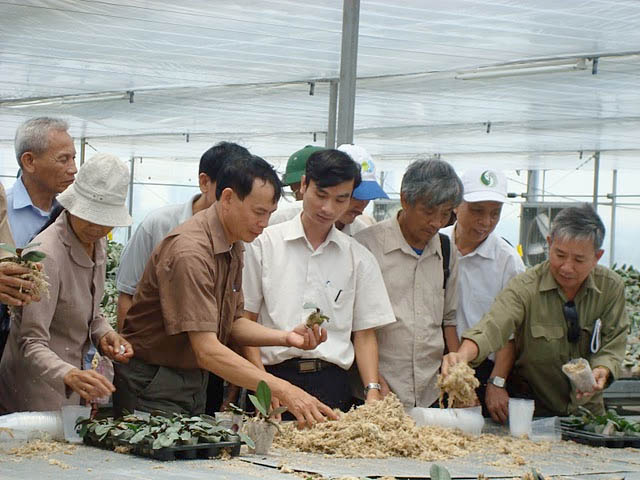
On November 17, 2009, a group of 10 trainees learned how to plant orchids and other flowers as a part of VVAF's DRIVE program. Ninh Binh VAVA is planning to display their products, including orchids and other flowers as well as vegetables, during the Lunar New Year (TET Holiday).
The DRIVE program has trained 60 members of the Ninh Binh Agent Orange Association in gardening techniques including how to properly planting flowers and vegetables; additionally, 30 members received on-the-job training. The trainees are dioxin- affected Vietnam veterans who are unable to work and therefore have difficulty earning a living. However, the techniques they learn at the Nin Binh Agent Orange Association, including how to plant flowers and vegetables make this more feasible. For more pictures of the Ninh Binh job trainings, please click here.